 Color symbolism
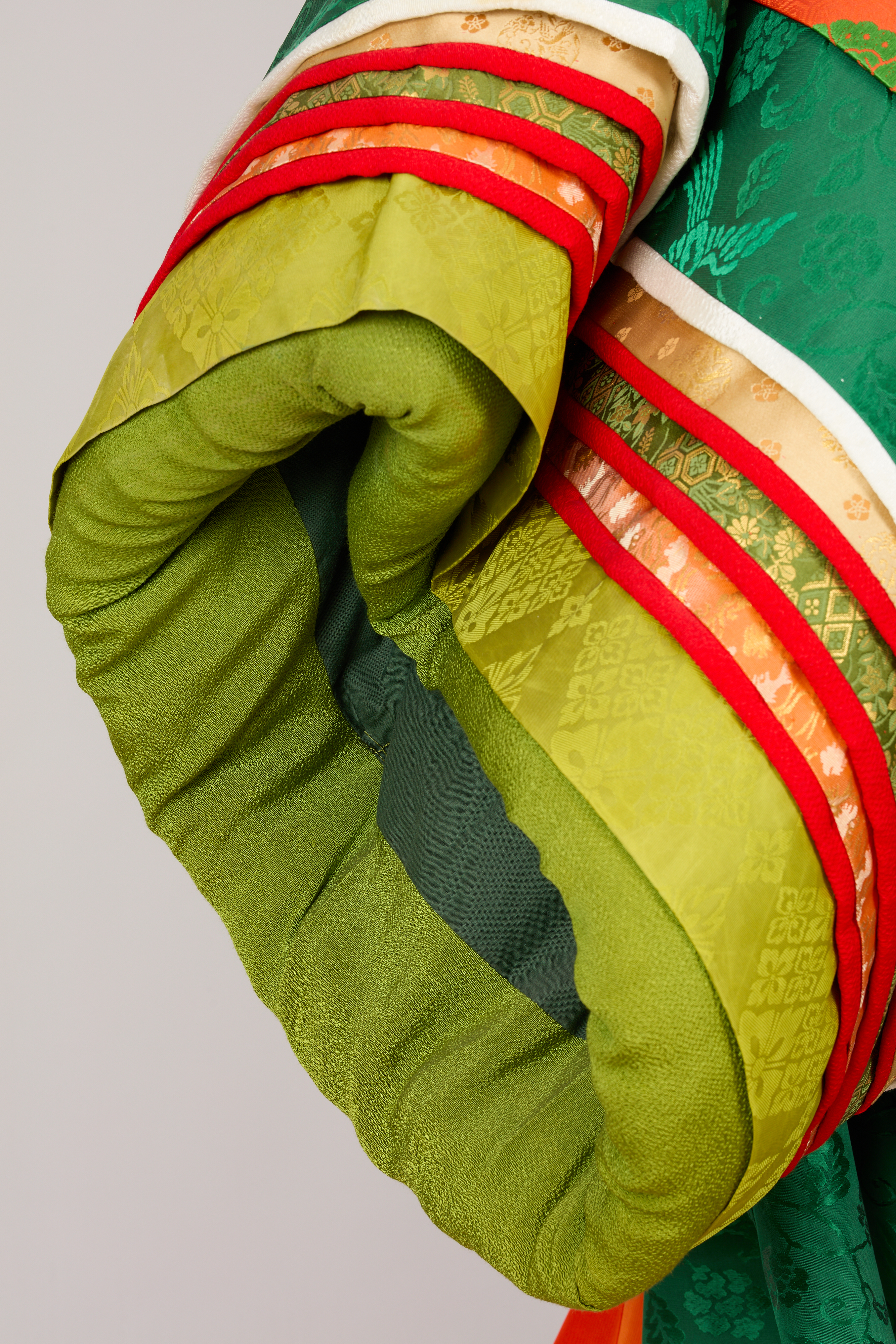
Colors and patterns have always held significance in all cultures. In Heian-period Japan, colors could serve as indicators of a specific court rank or hierarchical status (similar to purple in the West); some could only be worn with imperial permission. Often, color names or motifs referred to nature and the seasons.
 Cultural significance
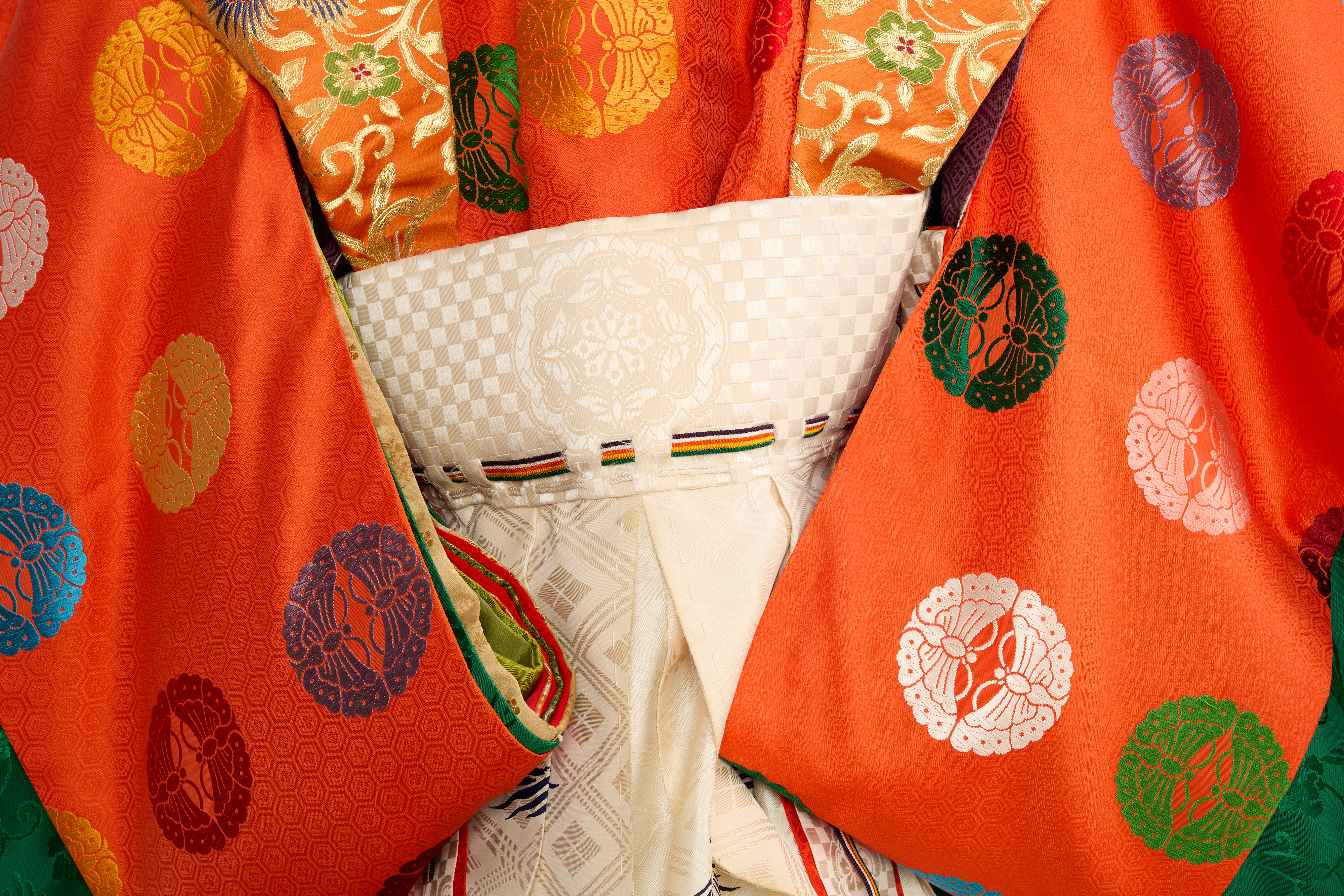
Today, the jūnihitoe can still be seen at the enthronement ceremony of the Japanese imperial couple and at the wedding ceremonies of imperial princesses. Japanese people are most familiar with the jūnihitoe through the dolls that are placed on a multi-tiered doll display in families with daughters every year for the Girls’ Festival (“hina-matsuri”) on the 3rd day of the 3rd month. The Girls’ Festival also plays an important role in the episode from the film “Dreams,” from which this costume originates.
 General Information
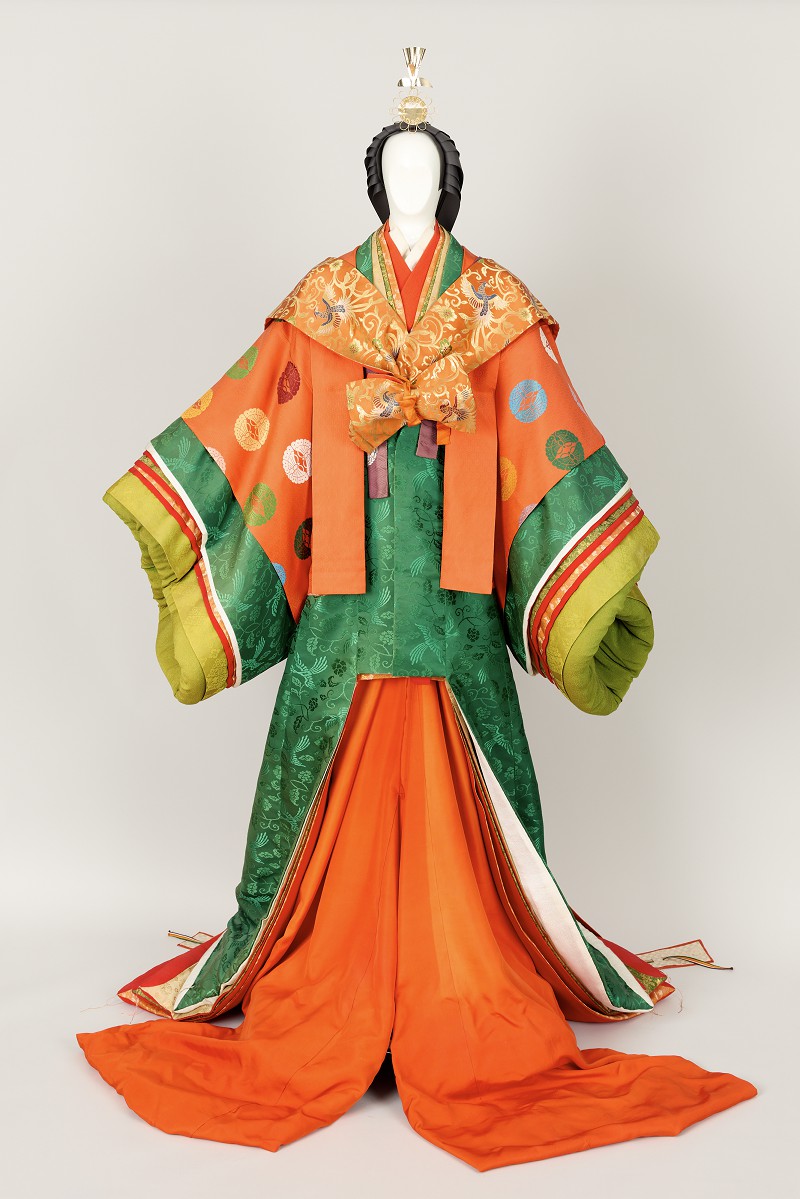
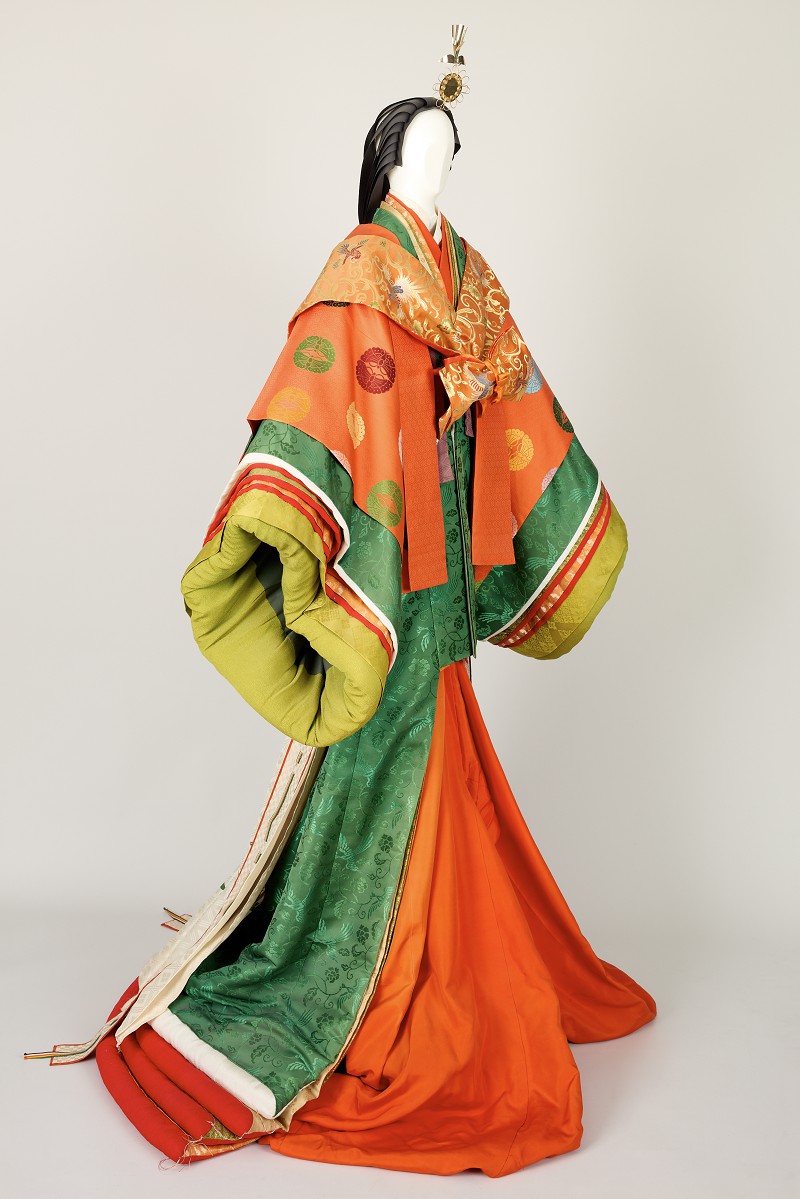
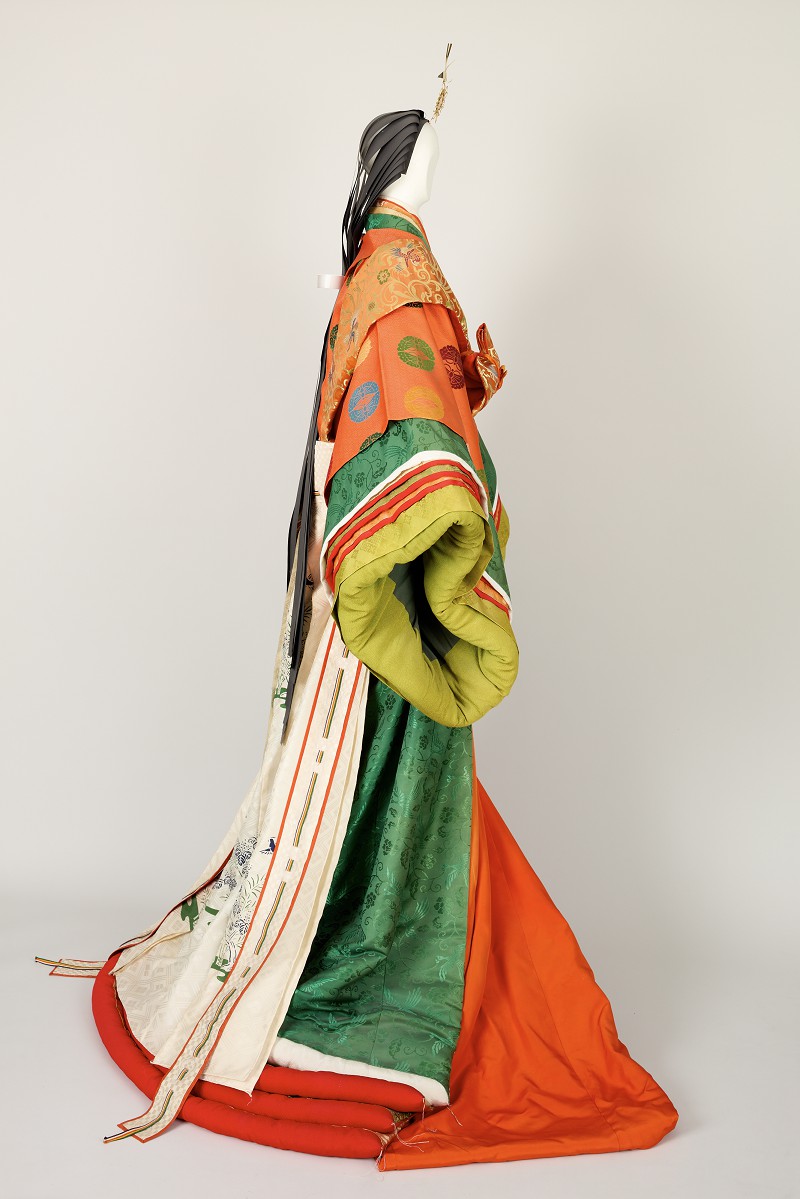
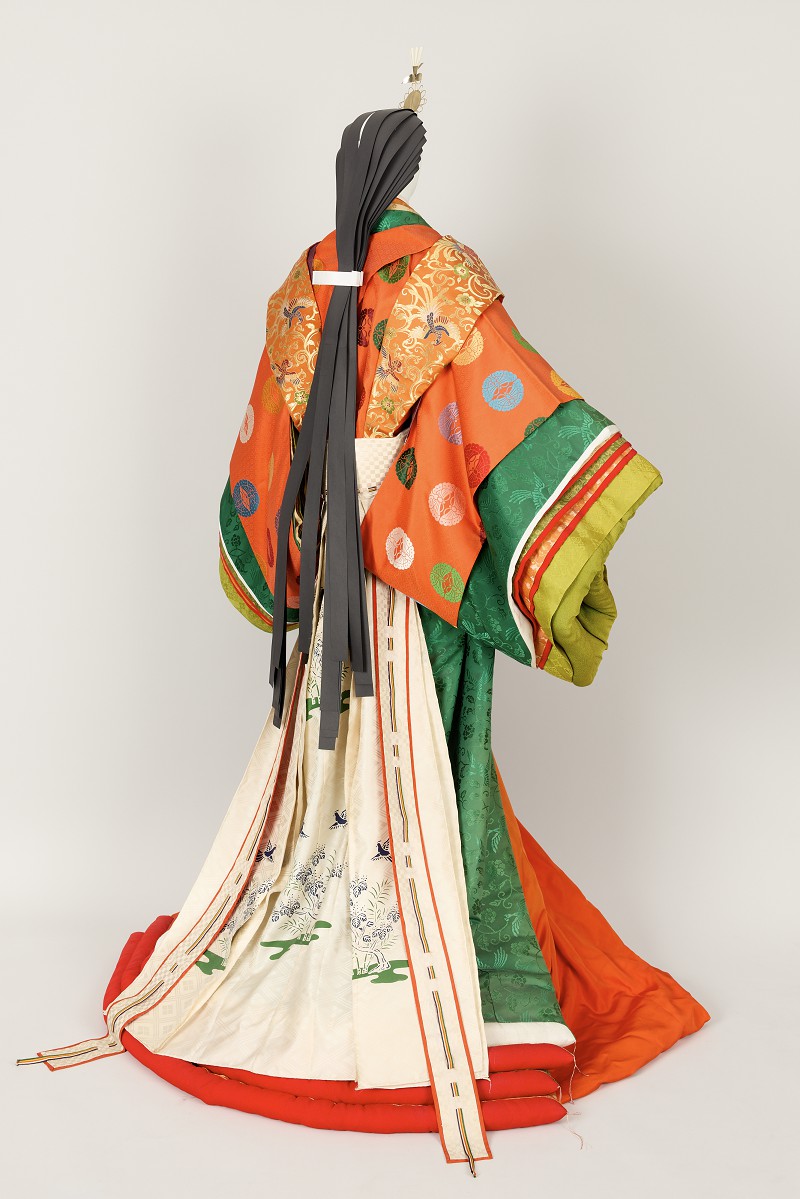
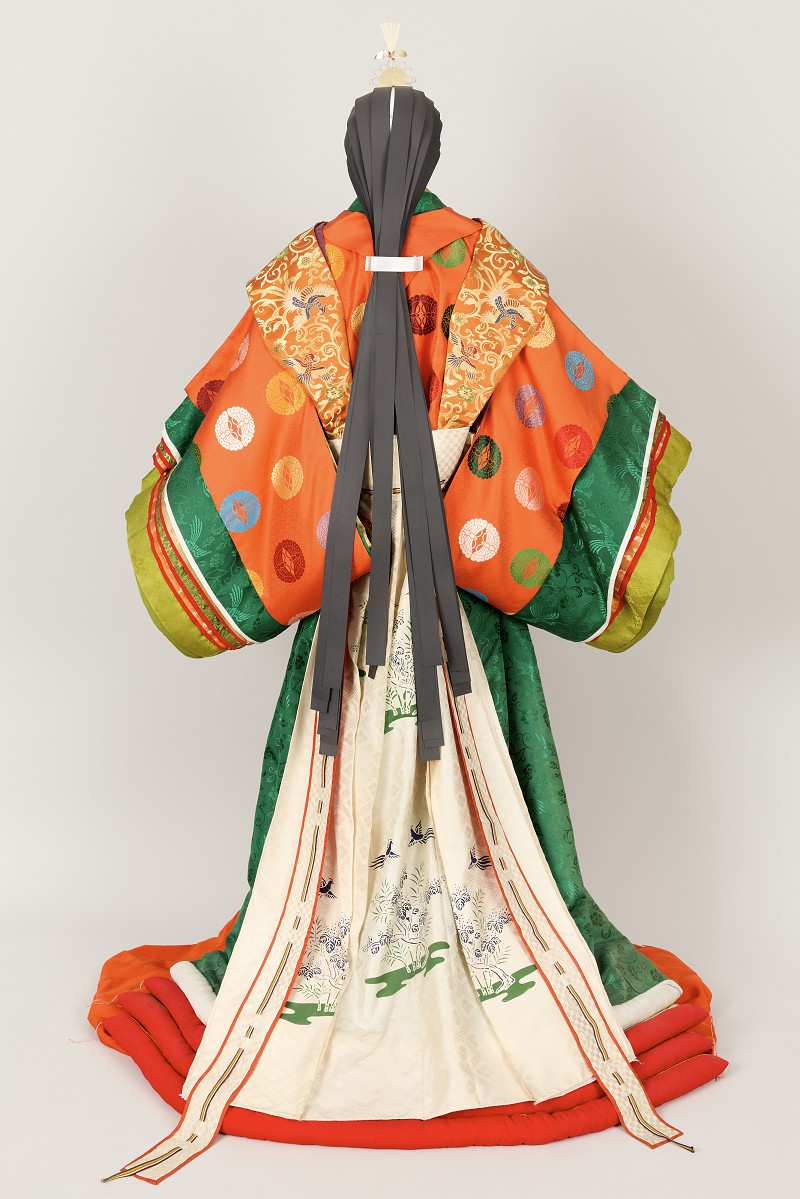
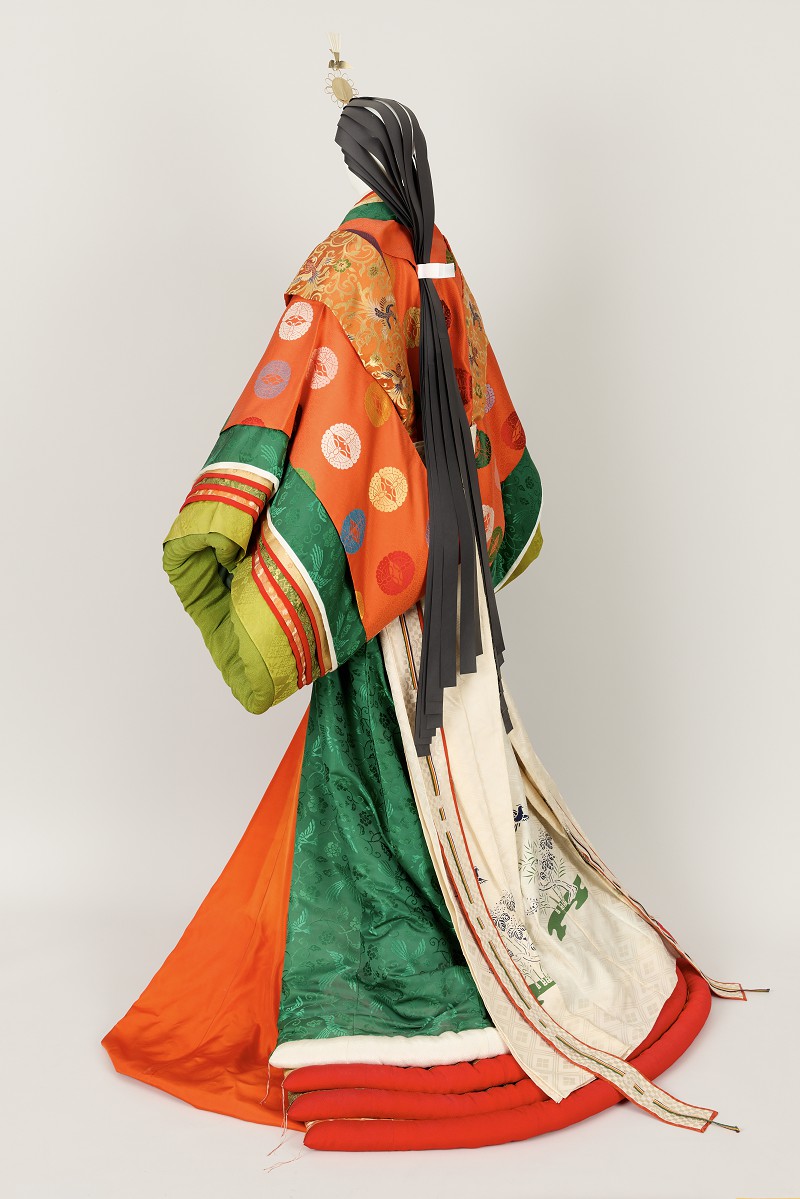
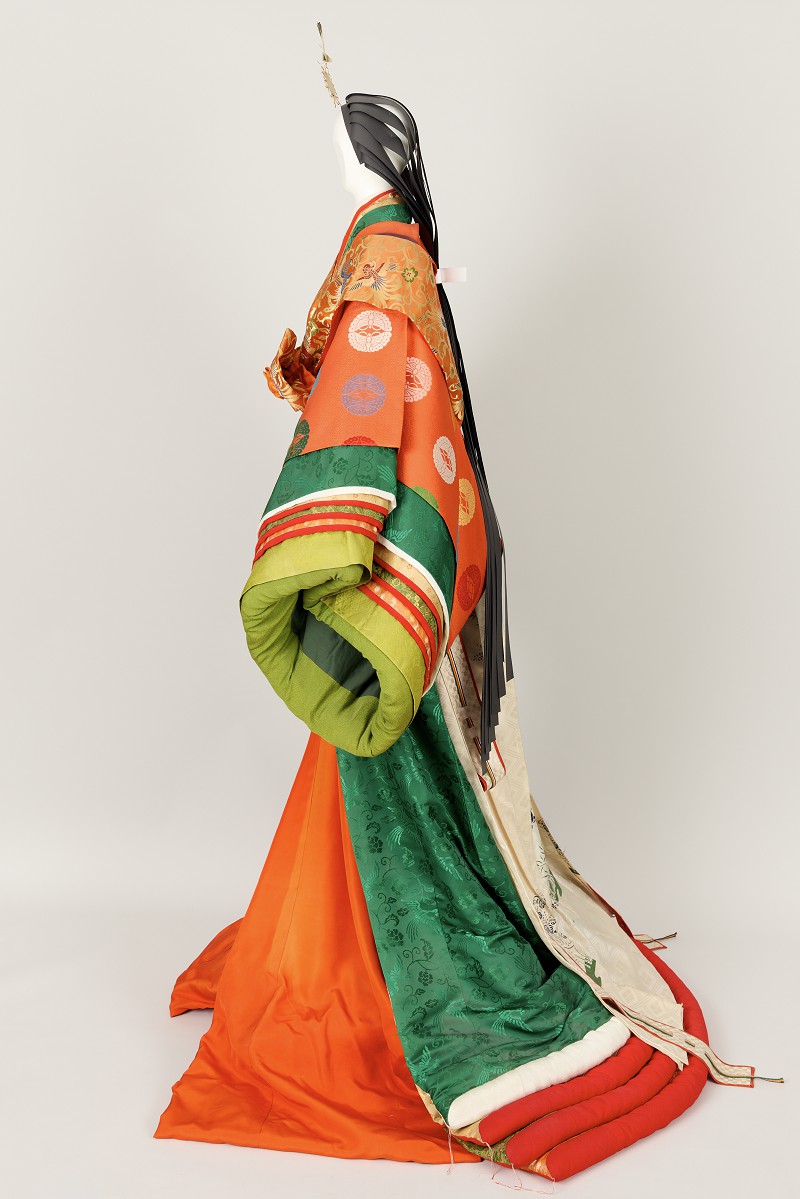
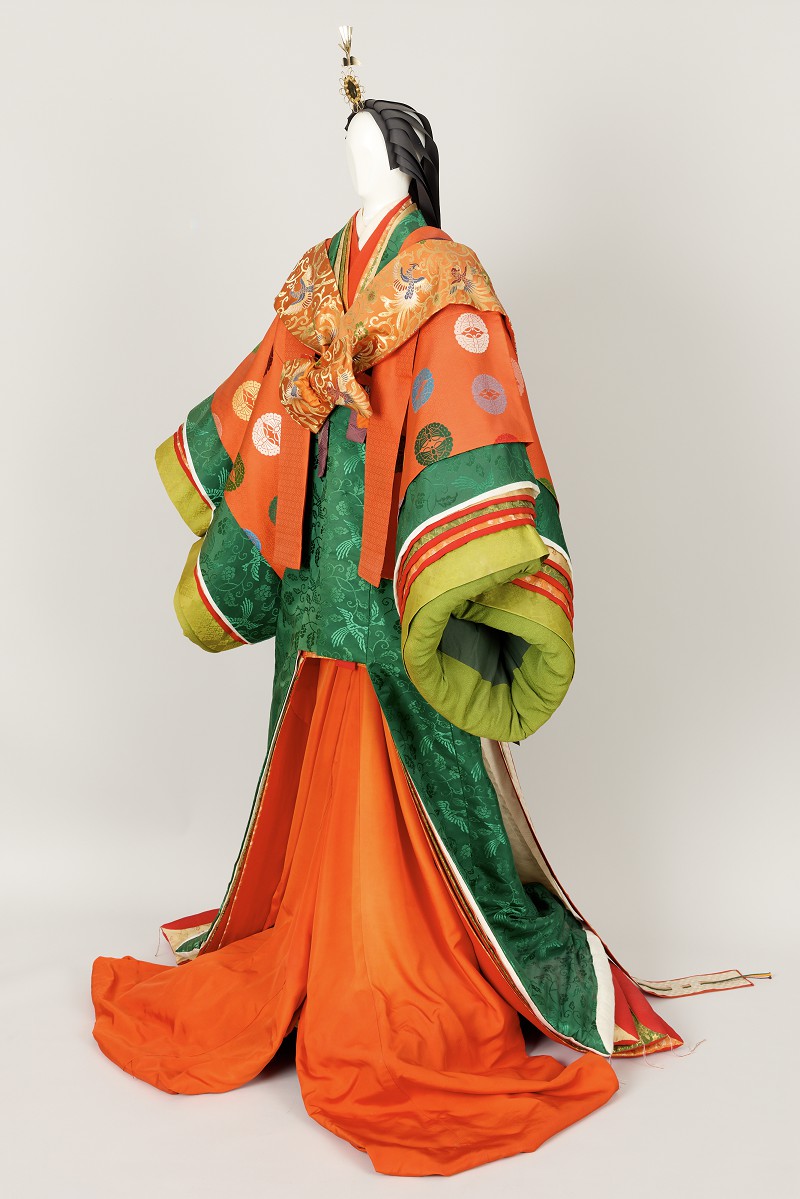
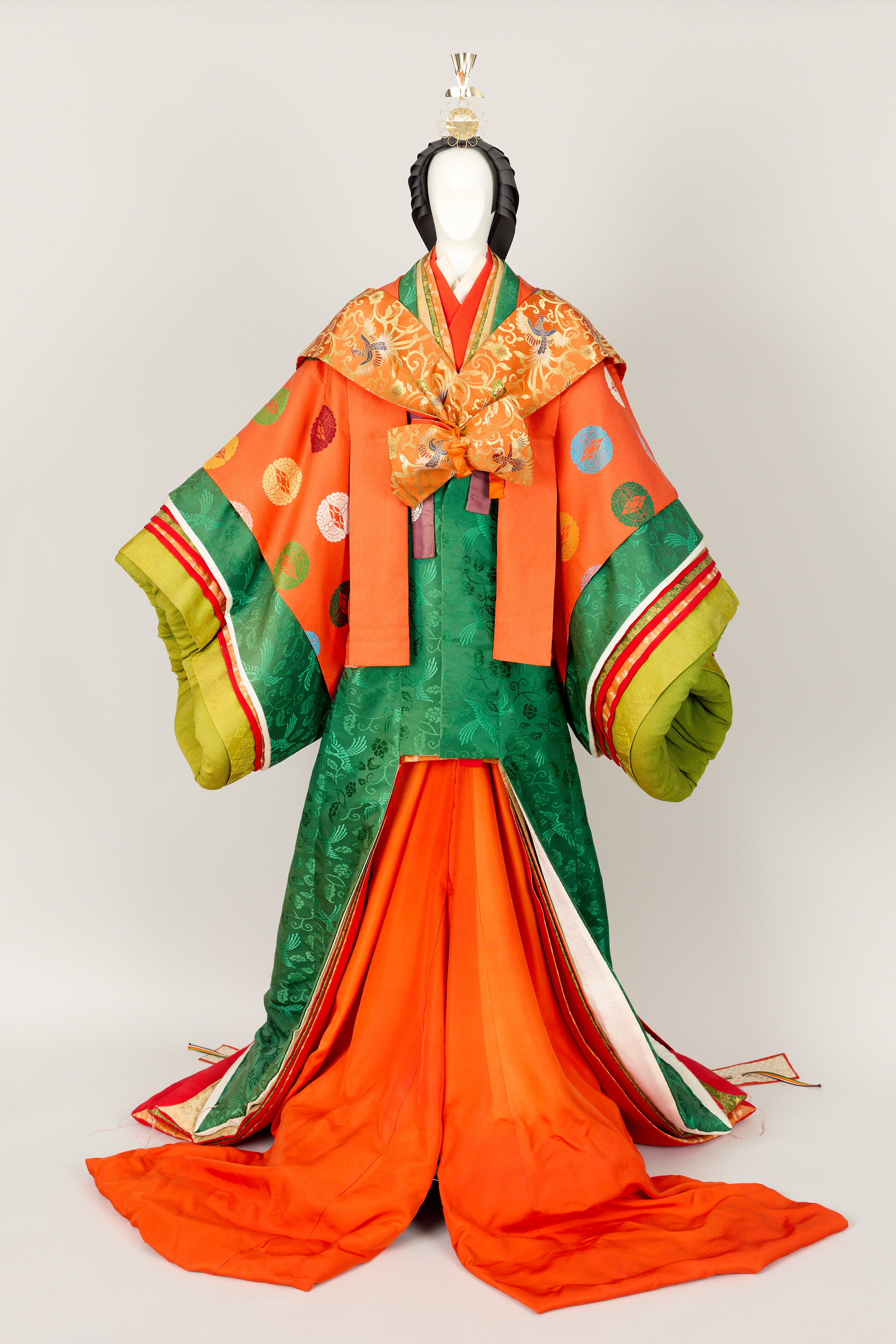
The princess’s costume on display here, a jūnihitoe (literally “twelve layers”), is an elaborate and traditional garment from the Japanese imperial court of the Heian period (794–1185/1192) and was worn exclusively by noblewomen at the imperial court during ceremonies or other special occasions. Although the name means “twelve layers,” the literal translation of the term is misleading, as jūni (“twelve”) is to be understood here in the sense of “many.”
For more detailed information on the Jūnihitoe and its use in the film, please see the [2] tab.
 Parts of a Jūnihitoe
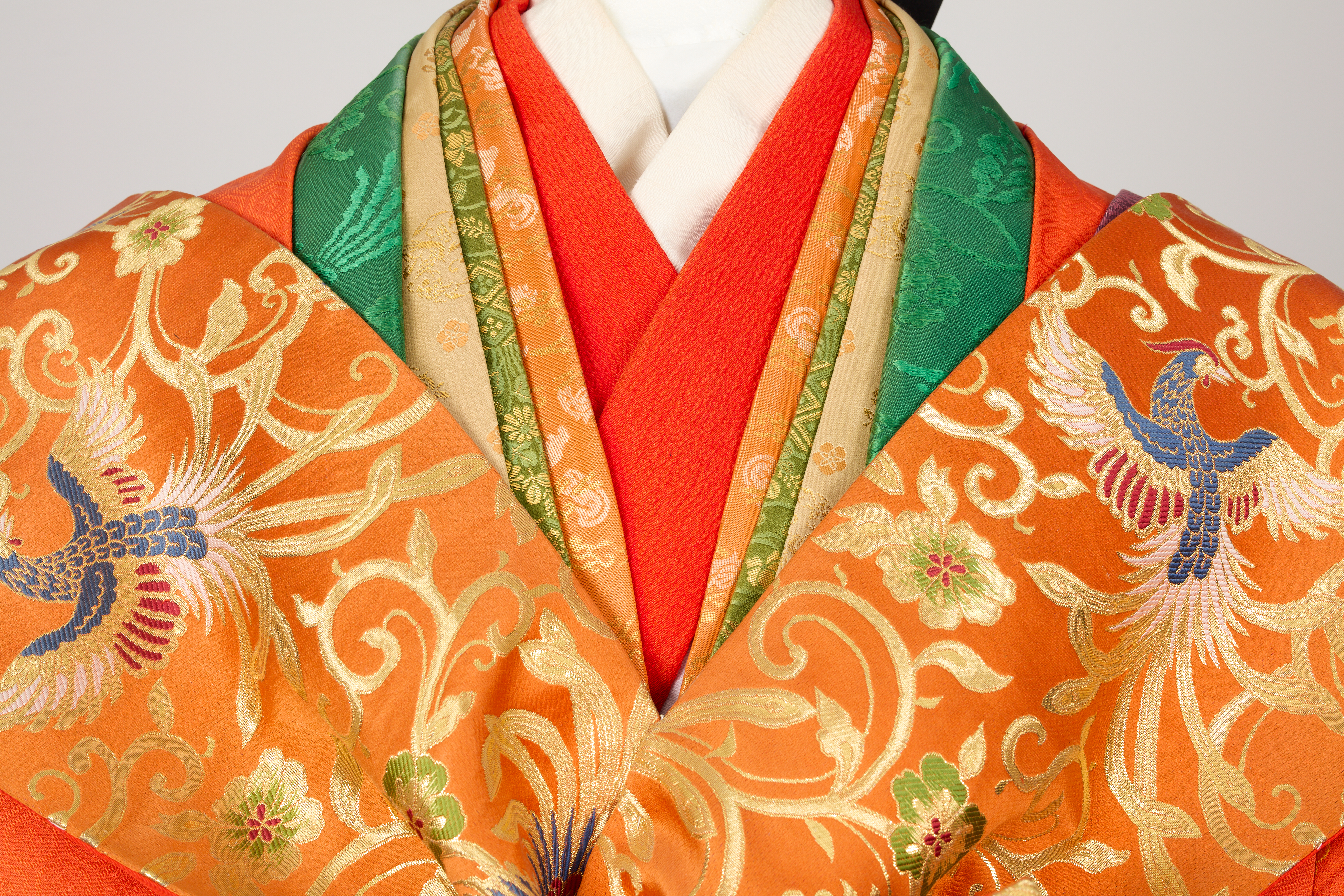
A Jūnihitoe consists of various parts and layers. Each of these has symbolic and cultural significance, with the colors, patterns, symbols, and their combinations revealing new layers of meaning. The costume on display here consists of eight individual garments, each with its own name.
For more detailed information on the individual components of a Jūnihitoe, see the [2] tab.